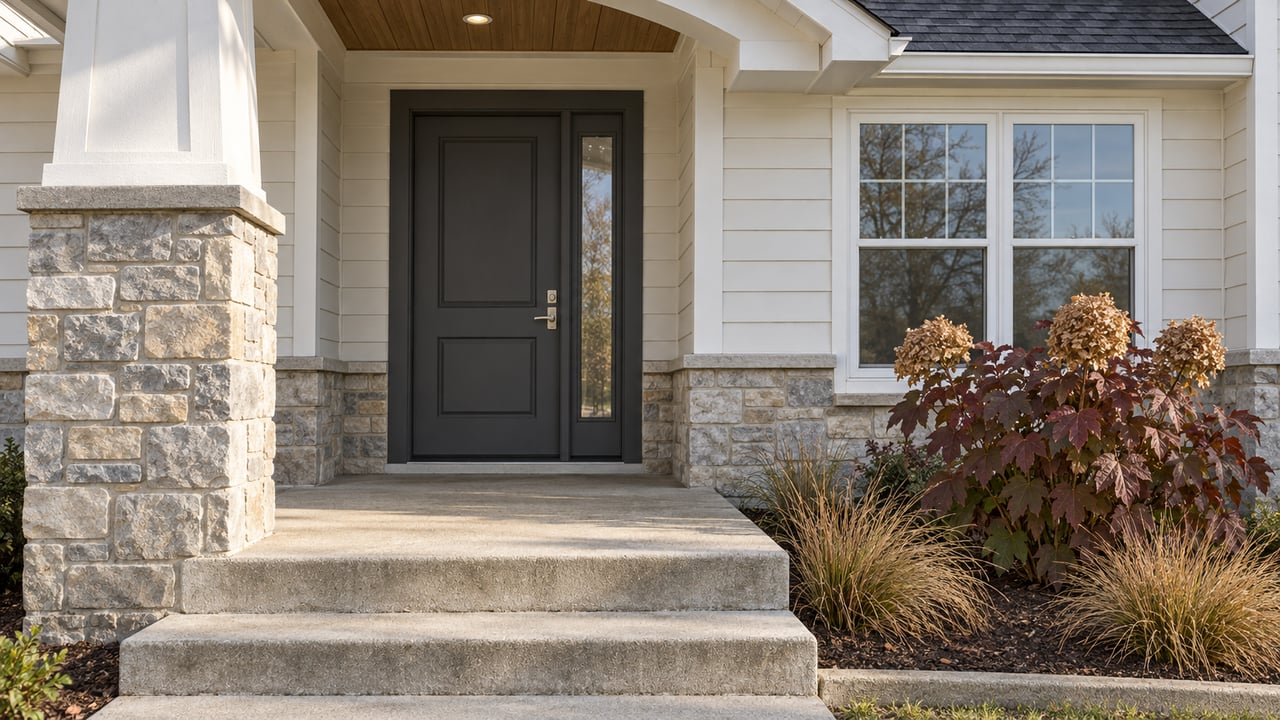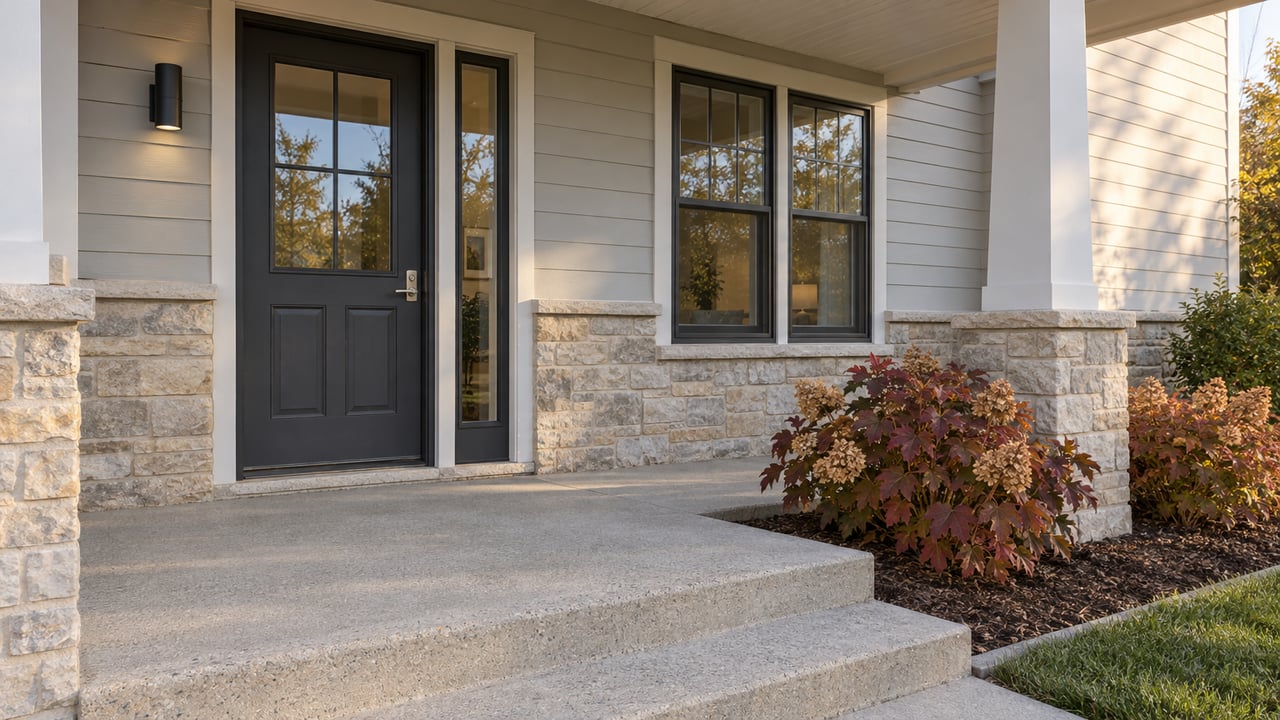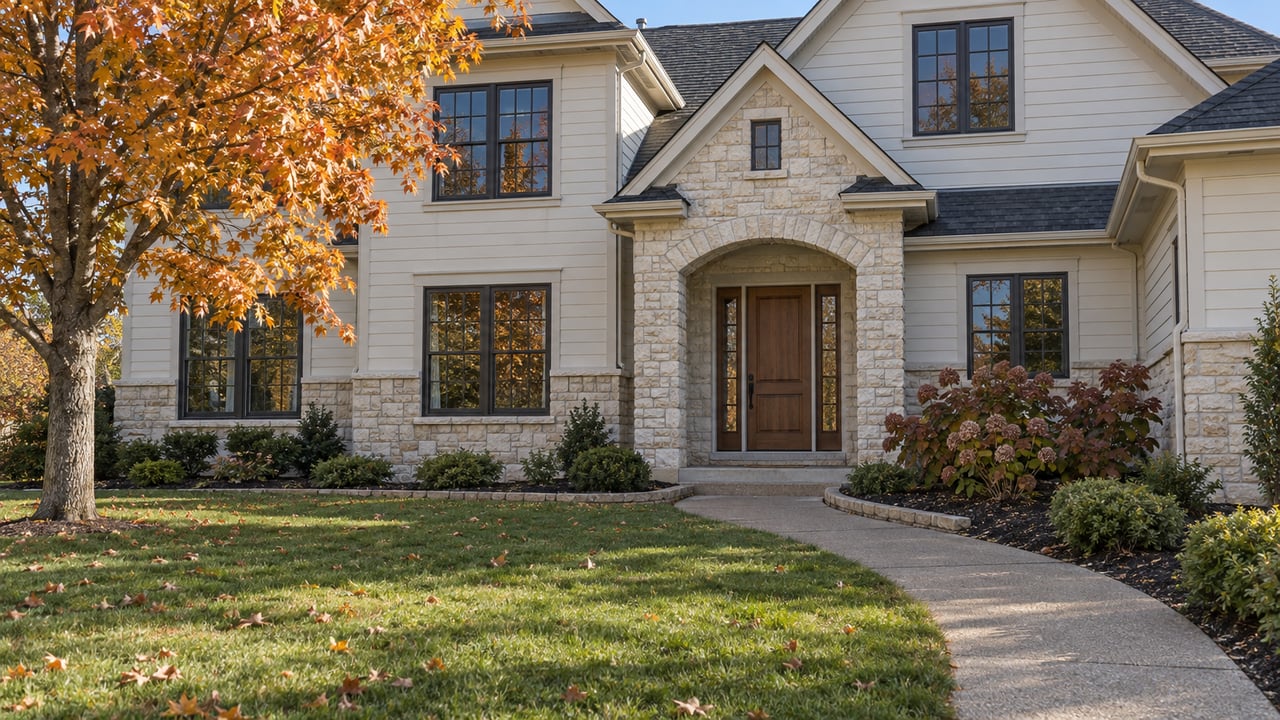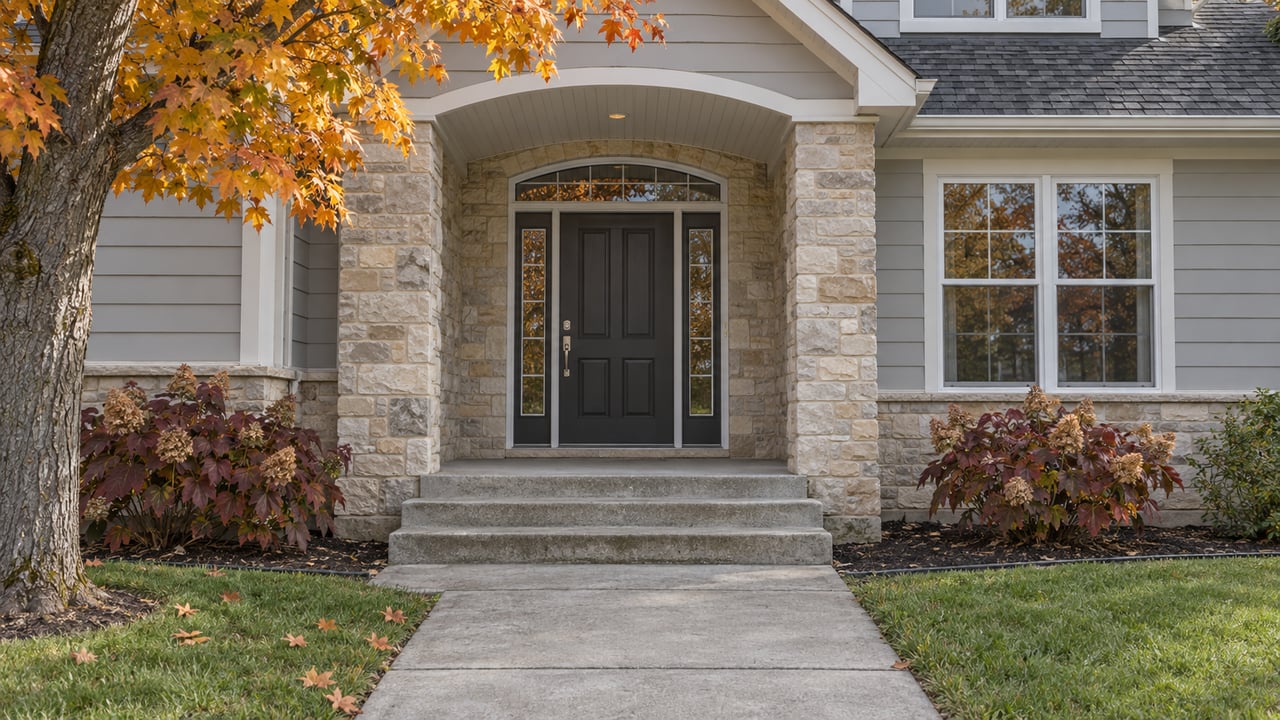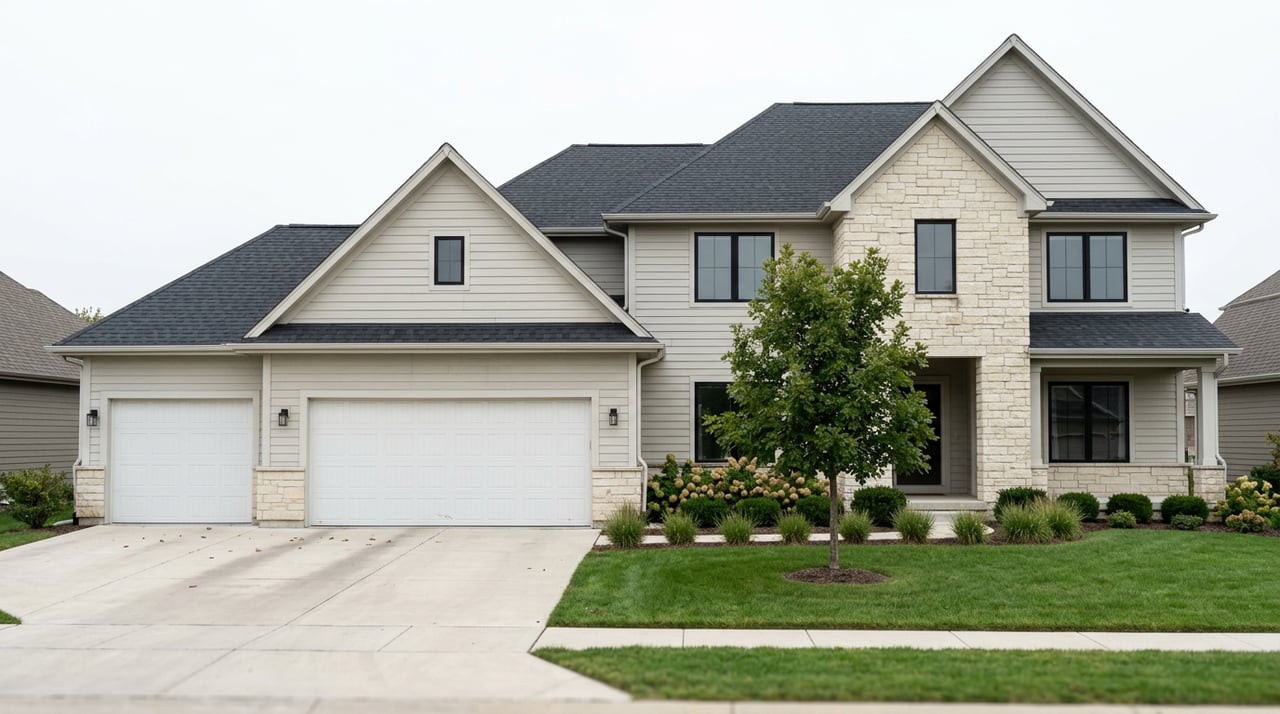
A family shopping new construction in Olathe last spring landed on a home in Boulder Creek, at 169th Place and Mur-Len Road, because the listing said Olathe and the price fit the budget. The assigned schools are Timber Sage Elementary, Woodland Spring Middle, and Spring Hill High School, rather than Olathe schools. The subdivision sits inside Olathe's city limits and inside the Spring Hill school district at the same time. That's not a paperwork mistake. It's what happens when a city boundary and a school district boundary get drawn by two different processes, decades apart, and a new subdivision happens to land in the overlap.
That overlap is a small detail with a bigger lesson attached: an Olathe address doesn't always mean what a buyer assumes it means. Neither does an Olathe median price.
The Median Everyone Quotes Is Blending Two Places
Search "Olathe home prices" and you'll find wildly different numbers depending on where you land, some in the high $300,000s, some near $400,000, some north of $480,000. That spread isn't sloppy research. It's a symptom of a city that functions as two housing markets sharing one name.
In Olathe's Original Town, the historic core near downtown, homes sold for a median of $273,000 over the three months ending June 2026, up just 0.3 percent from the same period a year earlier. Homes there still moved fast, averaging 4 days on market, but volume actually slipped: 52 homes sold in June 2026 compared with 63 the year before. That's a market with buyers but almost no room to grow, the signature of a small, already-built area where supply isn't expanding.
Now look at Olathe as a whole. Citywide, the median sale price reached $485,000 in March 2026, up 7.5 percent year over year, with homes averaging 24 days on market and drawing about three offers apiece. A separate window covering the three months ending May 2026 put the citywide median at $484,710, up 10.4 percent year over year, with a faster 11-day average and roughly two offers per home. Different windows, same story: Olathe overall is appreciating several times faster than its own historic core.
Widen the lens once more and Johnson County's median sale price hit $505,500 in July 2026, up 5.3 percent year over year, with only 2.1 months of supply and homes averaging 100.4 percent of original list price. Olathe citywide sits close to that county figure. Original Town sits nowhere near it.
| Submarket | Median Price | Time Window | Year-Over-Year | Days on Market |
|---|---|---|---|---|
| Original Town Olathe | $273,000 | 3 months ending June 2026 | +0.3% | 4 days |
| Olathe citywide | $484,710 to $485,000 | March to May 2026 | +7.5% to +10.4% | 11 to 24 days |
| Johnson County | $505,500 | July 2026 | +5.3% | Not reported |
One city. One headline median. Two markets moving at two different speeds underneath it.
Where Olathe's New Development Is Concentrated
The city's adopted plan provides context for the development figures.
On April 21, 2026, the Olathe City Council adopted Elevate Olathe, a 15-year comprehensive plan guiding how the city handles annexation, zoning, platting, and long-range growth. The plan guides future growth, and Olathe's own economic development office maps those growth corridors.
The city's Q4 2025 development report lists five new single-family subdivisions totaling 138 approved lots, concentrated in south and southwest Olathe along the Mur-Len, Black Bob, and Ridgeview corridors. The same quarter, the city approved 11 non-residential developments totaling roughly 177,000 square feet, retail space, a hotel, warehouse and storage capacity, public facilities, and school-related construction, much of it serving that same stretch of the city.
Road projects are also planned. Olathe's 2026-2030 Capital Improvement Plan includes street work on Santa Fe from Ridgeview to Mur-Len, alongside the 119th Street Expansion project, both aimed at the traffic new subdivisions bring. The city is doing this while holding its 2026 mill levy flat at 23.317 mills, unchanged from 2025, and while maintaining what it describes as the second-lowest mill rate in Kansas.
Original Town's median price changed little over the period. The new subdivisions and road projects described above are concentrated in south and southwest Olathe.
Walking The Corridor
Drive that stretch of south and southwest Olathe today and here's roughly what you'd pass:
- Stonebridge South, at 168th and Fellows Street, a newer phase of the larger Stonebridge community known for its four pools and two clubhouses, built on quiet, no-through-street lots.
- Hilltop Farms, at 175th and Mur-Len Road, a newer community centered on its own pool and cabana.
- Heather Ridge and Abbey Valley, both anchored near 167th Street and Ridgeview Road, with Abbey Valley offering just 51 homesites on no-through streets.
- Boulder Creek, at 169th Place and Mur-Len Road, priced from the $400,000s to $700,000-plus, and zoned to Spring Hill schools rather than Olathe's own district.
A few miles north and east, the established side of the city tells a different story:
- Persimmon Hill, near 151st Street and Mur-Len Road, built primarily in the late 1980s and 1990s, with mature trees and an active homeowners association.
- Arbor Creek, a larger established neighborhood from the 1990s and early 2000s near Olathe Lake, with a community pool and walking trails.
- Original Town itself, where lot sizes and home ages still reflect the city's original street grid rather than a builder's site plan.
The District Surprise, and Housing Characteristics
Boulder Creek's school assignment isn't an isolated fluke. City limits and school district lines in Johnson County were drawn independently of each other, and new subdivisions occasionally land on the wrong side of both at once. A buyer chasing new construction purely on the strength of an Olathe address, without confirming which district actually serves that specific parcel, can end up planning around a district they never intended to join.
That risk concentrates in the growth corridor simply because that's where new subdivisions keep appearing. Before writing an offer on new construction along Mur-Len, Black Bob, or Ridgeview, confirm the assigned schools directly rather than assuming from the listing address or city name.
The two submarkets also offer different housing characteristics. Olathe's own Communities for All Ages initiative points to rising demand tied to downsizing, aging in place, and multigenerational households. Established neighborhoods have smaller, already-built lots, while the growth corridor has larger new floor plans and HOA amenity packages.
What This Means If You're Buying Or Selling
If you're buying in the corridor, you're competing against builder inventory as much as against other buyers. That means comparing a resale listing to what a builder down the street is currently offering matters as much as comparing it to last year's closed sale. It also means confirming the actual school district before falling for the address.
If you're selling in Original Town or another established neighborhood, don't price to the citywide headline number. Your comparable pool is smaller and slower-moving, but that also means well-priced homes there are still closing in days, not weeks, with 52 sales in June 2026 alone despite thin inventory. Pricing to that submarket's own recent history keeps a listing from underpricing itself or sitting unsold while waiting for a number that only applies a few miles away.
Either direction, the county backdrop still matters. Johnson County's 2.1 months of supply and 100.4 percent average sale-to-list ratio as of July 2026 point to a market that rewards accurate pricing over aggressive pricing, in both Olathe submarkets at once.
Olathe's growth plan didn't just get adopted on paper earlier this year. It's already visible on the ground, from new subdivision signage along Mur-Len to the road crews working Santa Fe. Knowing which Olathe you're actually buying into, corridor or core, new build or established block, is the difference between a confident offer and a surprised closing.
Jamie Howell has built her practice around exactly this kind of local detail, wells, easements, district boundaries, and the fine print buried inside a city's own growth plan, translated into decisions her clients can make with confidence. If you're weighing a new build in Olathe's growth corridor against an established home closer to downtown, Jamie Howell can walk the actual comparables with you before you write an offer. Schedule Your Free Consultation to start the conversation.
This article is general information, not legal, tax or financial advice. Consult a qualified professional about your situation.