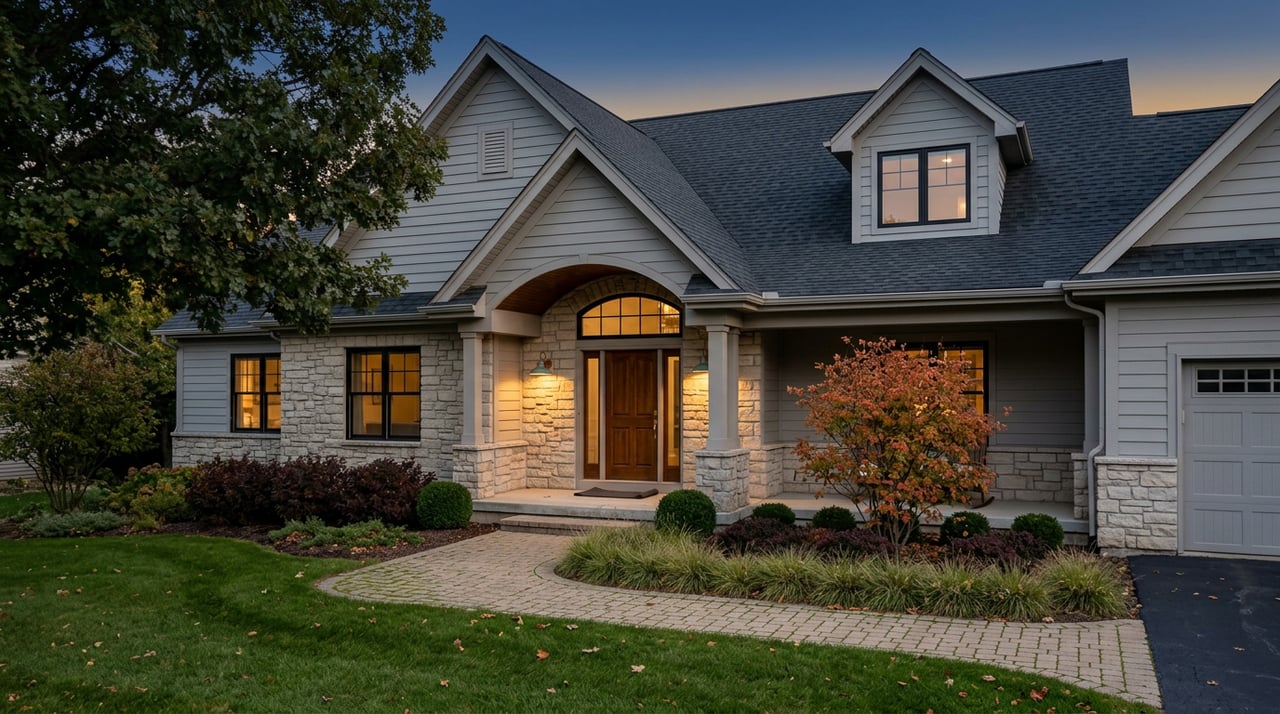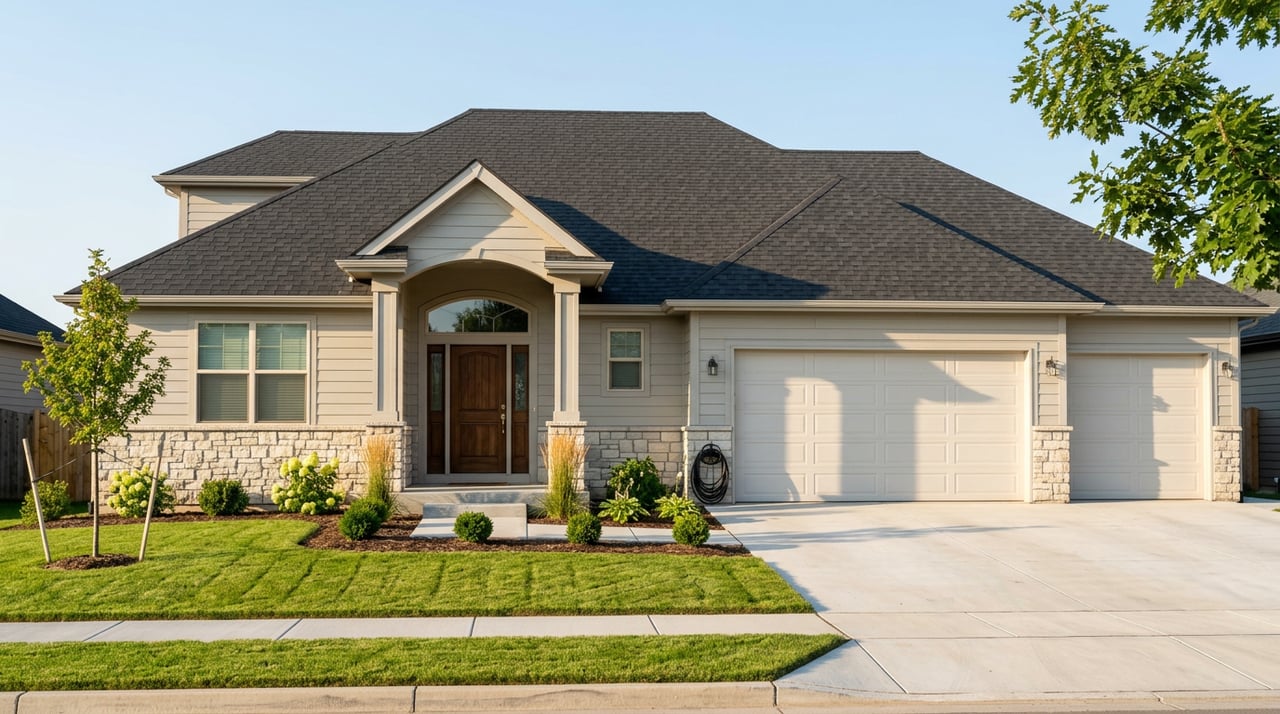
Pull up a Spring Hill listing and the header looks simple. One city, one ZIP, one school district. Pull up the tax record on the same parcel and the story splits in two. Spring Hill's city limits cross the Johnson–Miami county line, and the county a house sits in changes the mill levy, the sales tax at the register, and the mix of new construction the buyer is competing against.
That split is the piece the median price hides. A home listed at $377,000 on the Johnson County side and a home listed at $377,000 on the Miami County side are not the same product, and the difference shows up in the escrow line before it shows up anywhere else.
The mill levy is where the map bites
The City of Spring Hill states plainly on its taxes and fees page that sales tax and property tax rates vary because the city sits in two counties. The gap is not cosmetic. Historical Miami County data has recorded the two combined rates side by side:
| Location | Combined mill levy | Approx. tax on a $250K home |
|---|---|---|
| Spring Hill (Johnson County side) | ~146.9 | ~$4,177 |
| Spring Hill (Miami County side) | ~158.9 | ~$4,552 |
| Johnson County average | ~122.3 | ~$3,469 |
| Miami County average | ~131.7 | ~$3,742 |
Ownwell's 2026 effective-rate analysis puts Spring Hill at 1.61 percent, the highest effective property tax rate in Johnson County, against a county median of 1.27 percent and an Overland Park rate of 1.17 percent. The reason is the USD 230 school levy, which Free State News reported at 67.198 mills, the highest school mill levy in either Johnson or Miami County. That single levy is the biggest line on the bill, and it sits on top of whichever county rate the parcel is assigned to.
Two implications a buyer should hold in their head at the same time. First, the Miami side carries the higher combined mill. Second, the Johnson side carries the higher land basis. So the higher tax rate lands on the cheaper dirt, and the lower tax rate lands on the more expensive dirt. The two effects narrow the gap in monthly carrying cost, but they do not erase it, and the direction of the swing depends on the specific parcel.
Where the new construction is actually going
The median moves with the mix, and the mix in Spring Hill is being set by builders on the Johnson County side. When KSHB spoke with community development director Mike Mallon in the spring, he said the bulk of development is happening on the Johnson County side and that the city has approved roughly 1,800 new residential dwellings over the last four to five years, with about 400 building permits issued last year alone.
The active pipeline in 2026, per the Johnson County Post's February development tracker and builder pages:
- Wiswell Farms, northeast of K-7 and 199th Street, structured as a Reinvestment Housing Incentive District so the developer recovers infrastructure costs from tax gains created by the new homes. Construction began in 2024 and more than 100 homes have sold since.
- Hidden Hills, along 207th Street east of Woodland Road.
- Boulder Springs, where Summit Homes has taken over the remaining lots and the last undeveloped phase, with a new phase coming in summer 2026 and homes priced in the $300s to $500s.
- Woodland Ridge, with Chris George Custom Homes opening the 8th phase, a second entrance to the subdivision, and a second pool planned for the 9th phase.
- Fox Hollow, built by Ashlar Homes.
Livabl currently counts six new-home communities in the city, with D.R. Horton as the most active builder. Every one of the projects above sits on the Johnson County side of Spring Hill. That concentration is what pushes the citywide median toward a Johnson County product, even though Miami County still contains a meaningful share of the resale inventory and most of the larger-lot listings.
Reading the July 2026 numbers through the split
Redfin reported the three-month median sale price at $377,000 through May 2026, down 4.6 percent year over year, with $197 per square foot (down 9.22 percent) and 36 days on market against 48 the year before. Movoto's July 2026 snapshot shows a median list price of $441,000 at roughly $230 per square foot, a wider gap between list and sale than most Johnson County submarkets carry.
A buyer looking at those numbers has to decide what product they are actually comparing.
- New construction on the Johnson County side is where the $/sqft compression is happening. Builder incentives on carrying costs are showing up as price concessions rather than rate buydowns as pipelines deepen through 2026.
- Resale on the Miami County side tends to price at a lower headline number and lower $/sqft, with more of the city's remaining acreage-adjacent lots. The higher combined mill levy trims some of that advantage, and infrastructure timing (city water and sewer service extensions) tends to run a step behind the Johnson side.
- Older resale on the Johnson side is the segment most exposed to the days-on-market lengthening. When a builder two streets over is selling a 2026 floorplan at the same $/sqft as a 2015 resale, the resale is the one that has to move on price.
The 4.6 percent year-over-year decline in the sale median is easier to read once the split is visible. It is not evidence of citywide softening. It is evidence that the mix is shifting toward the Johnson County new-construction tier, which is priced tighter than the old resale it is displacing.
Transaction friction that only shows up at the closing table
Two items in Spring Hill deals catch buyers who assumed the city functioned as a single jurisdiction.
County of record dictates the whole tax and title chain. Johnson County uses AIMS for parcel data and the Johnson County Treasurer for tax collection. Miami County uses Beacon and its own treasurer. Title work, tax proration at closing, and every future assessment notice route through whichever county the parcel sits in. A buyer touring two homes on the same afternoon may be looking at parcels that will produce two entirely different sets of paperwork.
Reinvestment Housing Incentive Districts change the tax math on new builds. Wiswell Farms is structured as an RHID, which lets the developer recover infrastructure costs from property tax gains created by the new homes. The buyer's tax bill is still calculated normally, but a portion of the increment flows back to the project rather than to general funds. That does not raise the bill; it does mean the sales pitch about "your taxes fund the neighborhood" needs a caveat. This is the kind of structural detail that belongs in a due diligence conversation before the offer, not after.
Rezoning is still active around 207th. The city's planning commission meets the first Thursday of each month, and the 2025–2026 calendar continues to work through applications along the 207th corridor. A resale within a half mile of an unbuilt phase is worth checking against the current zoning and future land use maps before writing an offer.
Infrastructure timelines are visible if the buyer looks. The city has 191st Street under reconstruction between U.S. 169 and Woodland Road, new sidewalk installations running through five subdivisions this summer, and street resurfacing in another five. That work is a signal about which subdivisions are next in line for the city's attention, and it belongs in a buyer's read of what the neighborhood will look like eighteen months out.
What the split actually means for a buyer decision
Affordability comparisons across the metro tend to treat Spring Hill as a single number. MovingToKC's 2026 analysis places Spring Hill at roughly 23.1 percent mortgage-to-income against 38.2 percent for Leawood and 35.8 percent for Prairie Village. That gap is real, and it is why the city is absorbing 400 permits a year.
The gap is also averaged across two products. A buyer chasing the lowest carrying cost per square foot of finished space is often better served on the Johnson County new-construction side, where the mill levy is high but the price basis and builder concessions offset it. A buyer chasing land, a larger lot, or a resale with mature landscaping is often better served on the Miami County side, where the mill levy is higher still but the price per square foot is lower and the acreage is more available.
The choice is a real one, and it should be made with the tax bill, the school levy, and the future-land-use map on the table, not with the citywide median.
FAQ
Does the school district change with the county line inside Spring Hill? The city sits primarily within USD 230, so most residential parcels on both sides of the line fall under the same district. The mill levy attached to that district is applied against whichever county's base rate the parcel carries, which is where most of the tax-bill difference comes from.
Is the Johnson County side always more expensive? On price per square foot, generally yes, driven by the new-construction pipeline. On total monthly carrying cost, not always, because the Miami side runs a higher combined mill. Run the math parcel by parcel.
Are builders offering concessions in 2026? Yes. With days on market at 36 and inventory building, the active builders in Wiswell Farms, Boulder Springs, and Woodland Ridge are competing directly with resale, and closing-cost credits and design-center incentives are common. The specific package changes month to month.
What should I check before writing an offer on a Spring Hill new build? Confirm the county of record, pull the current mill levy, check whether the subdivision is inside an RHID, and look at the future land use map for the adjacent parcels. Fifteen minutes of due diligence changes the picture.
Spring Hill rewards buyers who read the parcel before they read the median. If you are comparing addresses on both sides of the county line, or weighing a new build against a resale two streets away, Jamie Howell can walk you through the tax stack, the pipeline, and the specific parcel-level questions before you write the offer. Schedule your free consultation and bring the listings you are looking at.